
By Roger Simpson
This article is about a flight undertaken some months back that did not quite go to plan, revealing the pressures and pitfalls of ‘Get-home-itis’.
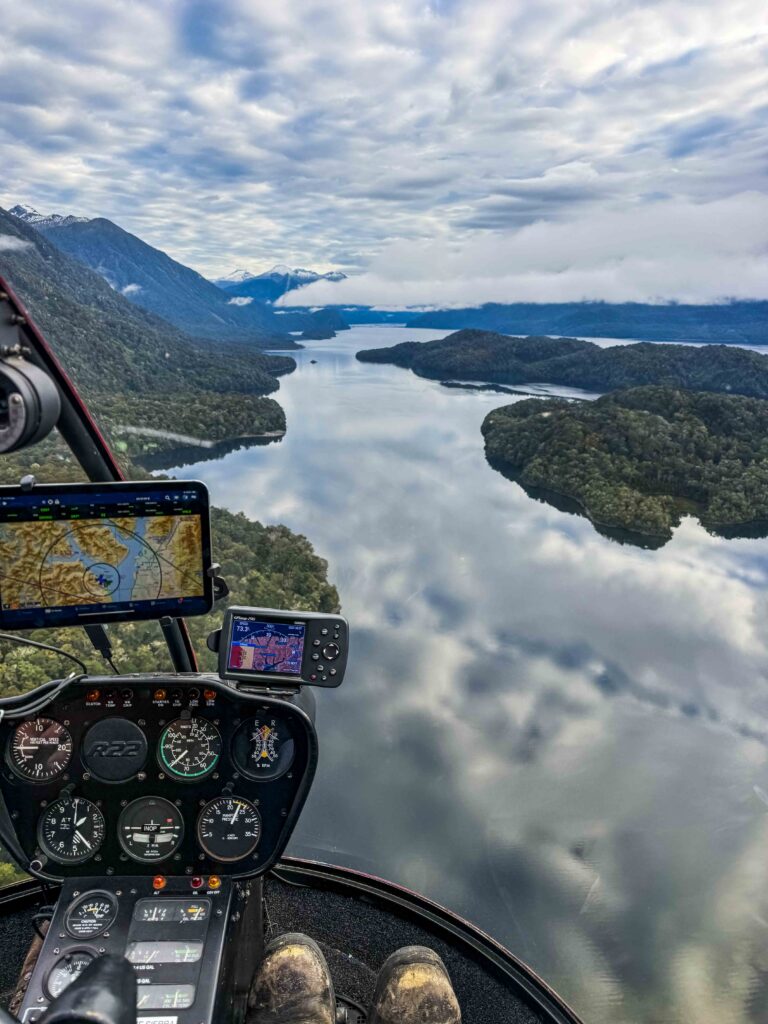
Photo credit: Roger Simpson
Day 1: We lifted early one morning in my Robinson R22, heading from Central Otago to Southland to visit a job site and undertake some surveying. On board was my engineer, Paul, who is also a good mate and has spent a good couple hundred hours in the cockpit with me. The day was very clear, and I recall only one isobar around the whole lower South Island. The temptation of perfect weather was too great, and we decided a decent loop around some fiords was a worthy deviation before work.
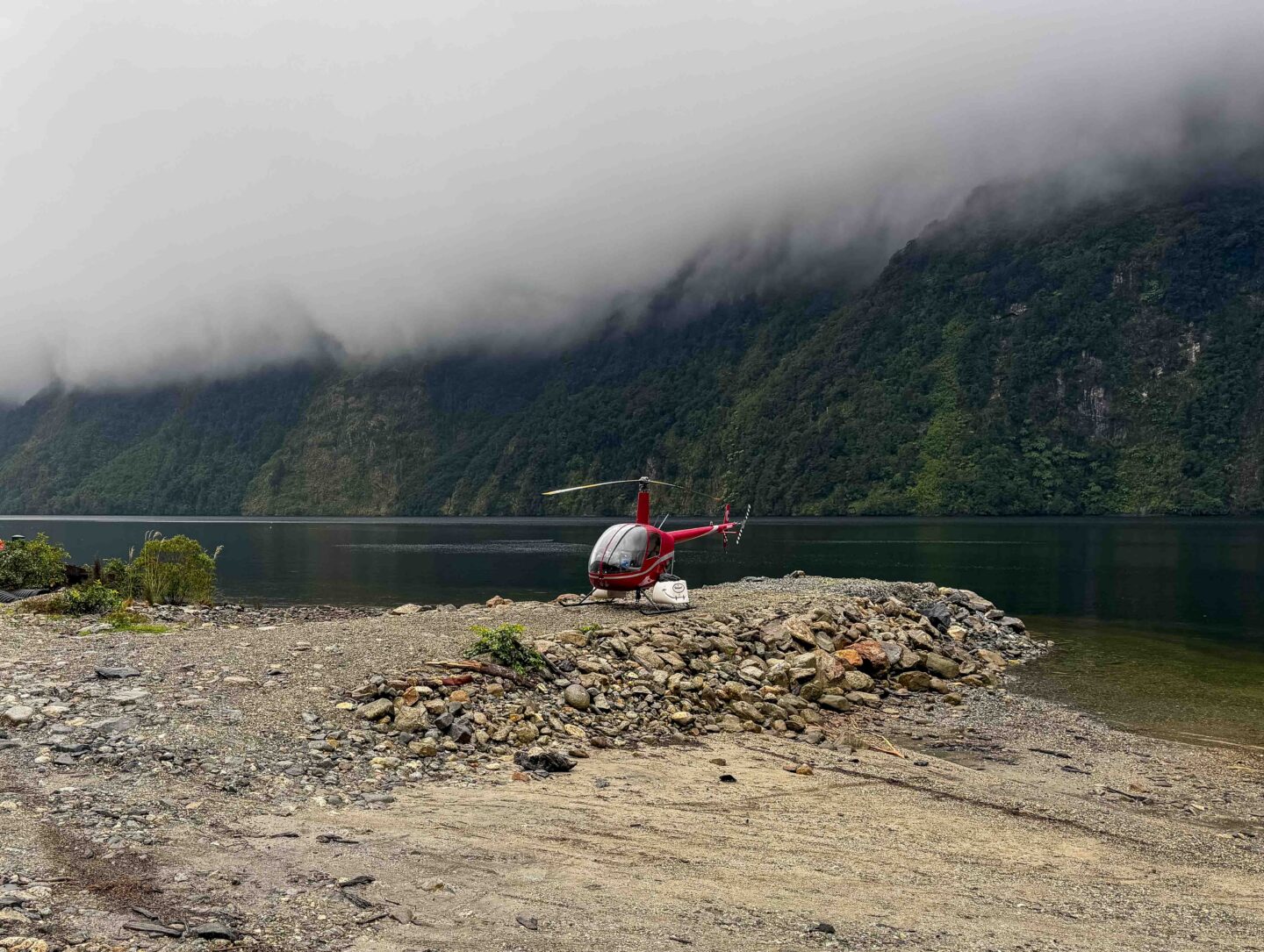
With a refuel in Manapouri, we tracked up lake Te Anau, across Henry Pass and wove our way into the top end of Nancy Sound. The weather was calm, with some scattered clouds around the tops. Having flown many times around Fiordland and to its further edges, it’s always been a place where I’m never completely comfortable due to its changeable weather, plus the fact you always seem to be flying away from fuel.
Decision was made to fly out to the coast, a short hop south and back inland up Thompson and Doubtful Sounds, across Wilmot Pass and back to Manapouri. On reaching the coast, the cloud base lowered considerably. Still with long-range horizontal visibility and in no danger of entering IMC, we proceeded with the intended track on the assumption that when we headed back inland to Wilmot Pass we would re-enter the same fine inland weather we had just left. That was the moment of error.
Flying up Doubtful Sound, still with long-range horizontal visibility, we reached Wilmot Pass with the cloud base locked tight around 1000ft lower than the pass. I acknowledge one amazing benefit of rotary wing over fixed is the ability to land on a rough riverbed, shut down and consider options without distraction. With roughly 1.5 hours of fuel on board and looking back at the rapidly lowering cloud on our just flown track, the decision was made to fly the thirty seconds back to Deep Cove Village and contemplate the situation.
Discussion with boaties taught us the phrase ‘don’t worry, it’ll be clear in an hour’. Comfortable with that information, we waited. Five-thirty pm came, the day was done, we were staying. With only the clothes on our backs we were very generously hosted with food, beer and the spare room of locals Billy and Vilma.
Day 2: “Don’t worry, it’ll be clear in an hour.” We waited then did some more waiting and began to feel the rising frustration of being grounded. Feedback from boats near the coast was that the cloud/fog was down to sea level and Wilmot Pass still clagged. This was where we had to start making clear decisions. First, it was decided that any attempt to leave the safe spot we had at Deep Cove would be done with nothing short of a 100% chance of success. This was to combat the rapidly rising ‘Get-home-it is’. Once again 17:30 came, the day was done, we were staying again. Billy and Vilma remained fantastic hosts, providing daytime fishing, evening hunting with Billy, fantastic meals and plenty of beer. I’m not going to lie, it could have been worse!
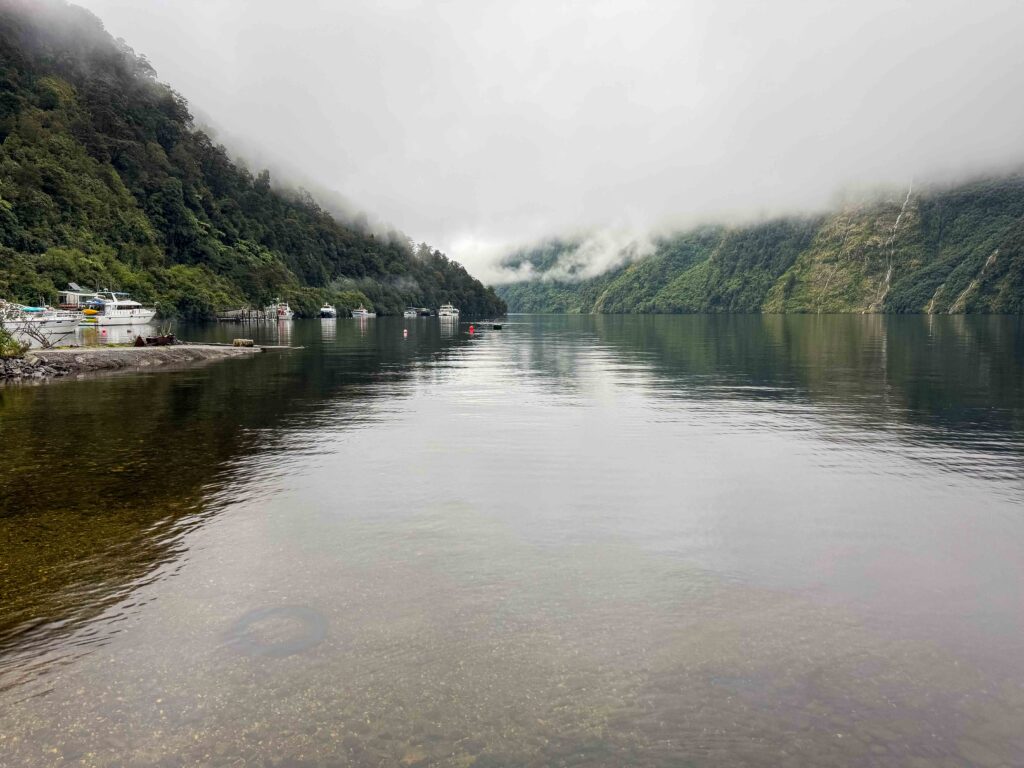
Day 3: Pouring rain, visibility right down, but we had the latest update from some boaties: ‘Don’t worry, it’ll be clear in an hour’. We did have options. We could get a ride over the pass and by road and boat out, however the logistics of coming back some other time to retrieve the machine were off-putting. Let alone that we had to spend the first two hours each morning fighting the kea, who were intent on tearing into the aircraft.
Get-home-itis was really knocking now, the brain saying ‘plenty of fuel, maybe low-level peak out to the coast and spot a hole?’. But this could easily result in spending a night in the bush with low fuel. The versatility of the helicopter can tempt you to take chances. It took great restraint to stick to plan A, which was no attempt with nothing short of a 100% chance of success.
And so 17:30 came, the day was done, we were staying, Billy and Vilma showing the magic of Kiwi hospitality once more.
Day 4: It was getting beyond a laugh now; we had to get home. Cloud was still very low. The fantastic commercial heli operators on the other side of the hill said there was hope today would clear. It was jointly decided by 11am that Paul would take the drive/boat option and make his way home, with me staying on site and maintaining Kea Patrol.
At 2pm confirmation came through from a local pilot that we could track out to the coast and cross MacPherson Pass and back to Manapouri. I can safely say, whilst not offering the best odours in the cockpit after four days in the same attire, the trip that afternoon was amongst the most enjoyable flights ever undertaken.
Ironically, I reached Manapouri before Paul, who arrived 20mins later, mildly inebriated due to the contributions of some obviously great travel companions during the lake crossing, who again displayed typical kiwi hospitality by filling my entire heli pod with live crays!
The summary: was the decision wrong, flying into weather expecting it to get better? Probably. We don’t intentionally make wrong decisions; it’s only on reflection that we can evaluate. What I was happy with, was that we gave ourselves clear parameters as to how we were going to get out of the shit we were in. Get-home-itis is a dangerous emotion, and this experience allowed me to see just how easily it clouds good judgement. One calculation we made early on. If we live to be, say, 80 years old, that’s somewhere over 29,000 days. So who cares if we spent one more day (alive) in Fiordland, a place arguably one of the most special on the planet?
Originally published in our quarterly Approach magazine Spring 2026 edition. Discover more stories, news and features by browsing our collection of past issues, all available to read online: AOPA NZ’s Approach magazine