
This article from Approach Magazine has been opened up for everyone including non-members to access on this website (see the end of the page below for further details).
By Neville Bailey
It’s been said many times that in the world of taildraggers, there are those who have, and those who will. We’re talking, of course, about the dreaded ground loop. And, in case that weren’t enough, the possibility of flipping upside down on landing, AKA the nose-over.
Now the more pedantic among you are already quietly fuming. Yes, I know, I know, I’m using the term taildragger much like the Brits use the term ‘carriageway’, a fond carryover from a bygone era, yet a complete contradiction to the original meaning. But the term taildragger has a certain ring to it – it just rolls off the tongue oh-so-nicely. So indulge me, and let’s continue shall we?
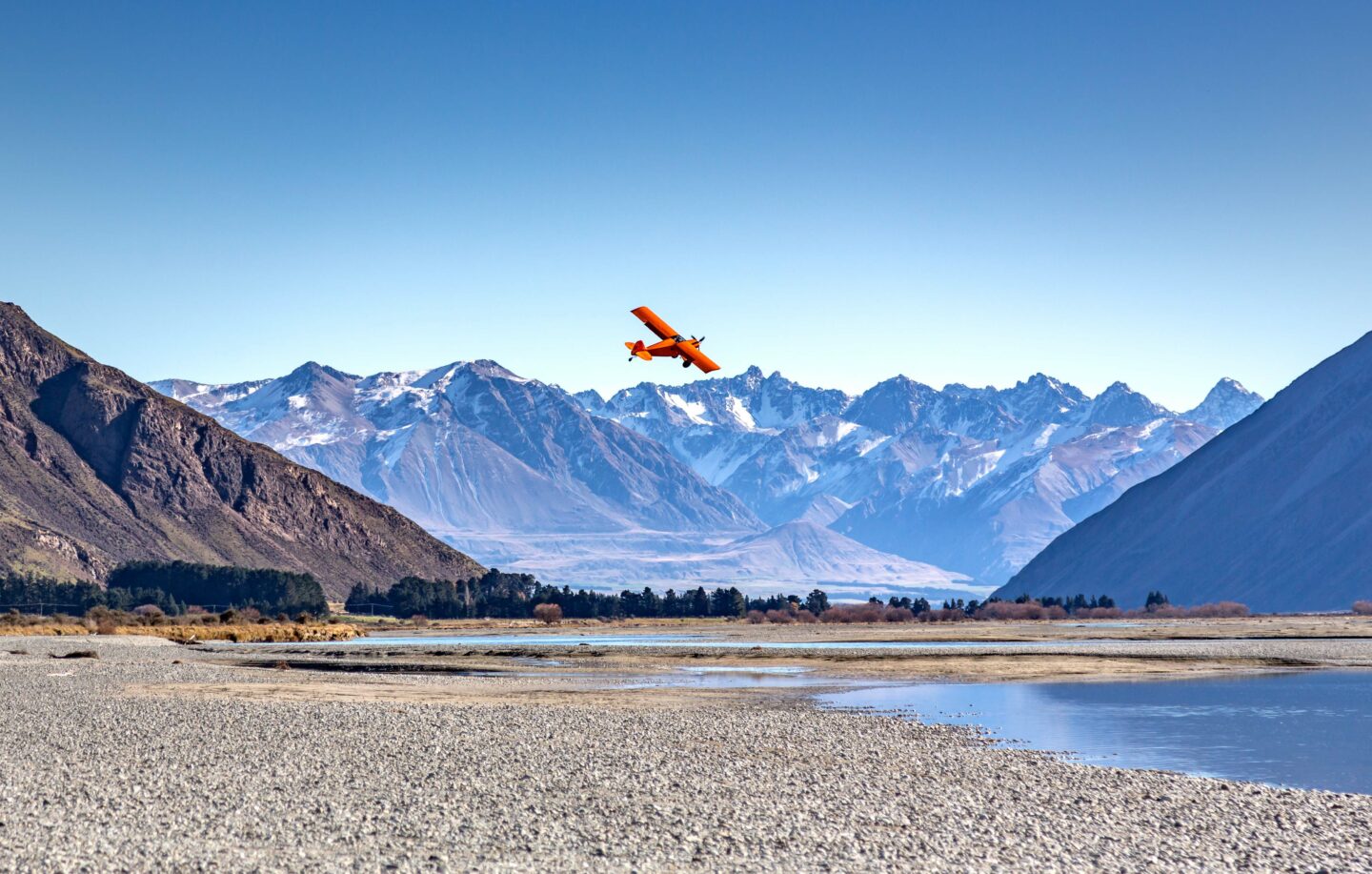
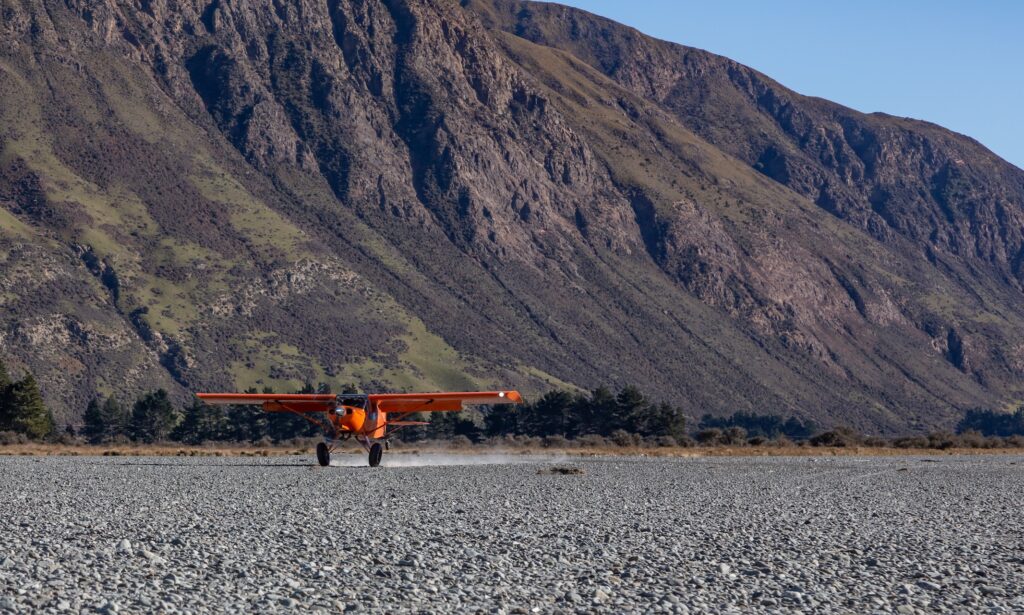
So what is a Taildragger? The term taildragger in this context is used to mean: a fixed wing aircraft with the main wheels forward of the centre of gravity. That’s quite a significant point, because on a taildragger, most of the aircraft’s weight resides behind the main landing gear, a design that makes them inherently unstable in yaw when on the ground. By contrast, on a tricycle aircraft, most of the aircraft’s weight resides forward of the main landing gear, thereby causing all the forces to work in your favour… directionally speaking. And just for the sake of clarity, a taildragger – once in the air – flies like any other aircraft; there’s really no difference. The ‘issues’ are all in the ground handling.
Is there really a problem? A quick peruse of insurance premiums for taildraggers confirms a rather inconvenient truth: a high rate of what is known in the industry as ‘loss of directional control on ground (LODCOG)’ type accidents. And the numbers don’t lie. Researchers Alex de Voogt from Drew University and Kayla Louteiro from Fairleigh Dickinson University did a study aptly named ‘Nose-Over and Nose-Down Accidents in General Aviation: Tailwheels and Aging Airplanes’. They note that “about 12% of all airplane accidents in General Aviation involve nose-overs and nose-down events”.
Why fly a Taildragger then? That’s a very good question. Who in their right mind would want to attempt to fly one, let alone own one?
Well, me for a start. And as it turns out, many of you too.
We’ve recognised some of the advantages that taildraggers can offer and that, despite the increased statistical risk, they are often well suited to particular operations, such as off-airport use. And we’ve noted that with a healthy dose of good training and plenty of practice, we can minimise some of those aforementioned pesky risks.
Some, like myself, have learned to fly taildraggers later on in life. We’ve listened to the cautionary-yet-well-intentioned advice of others, yet gone ahead and done it anyway, apparently defying an almost certain demise along the way. We’ve spent countless circuits and landings learning to keep the aircraft pointed straight down the runway, listened to analogies of poor shopping trolley design, and we’ve earned that sense of accomplishment as we eventually mastered the art and developed a feel for it. And many of us – for the most part – have managed to avoid the aforementioned ground-loop and nose-over.
The dreaded ground loop
For clarity, the term ‘ground-loop’ is used to describe when the tail end of the aircraft swings forward and overtakes the front. Because the centre of gravity on a taildragger is aft of the main wheels, if the aircraft is allowed to start yawing when on the ground and moving with any appreciable speed, the centrifugal force can quickly build, placing stress on the outside wheel and tire, often resulting in a collapsed undercarriage and damage to the wings, prop and engine.
The additional load placed on the outside tire can also peel that tire off the rim, as the tire is no longer able to rotate properly and becomes a very effective brake. It may then cause the aircraft to flip upside down. So while a taildragger nose-over can be caused by too much brake application while moving straight ahead, it can also be the result of the outside tire skidding sideways partway through a ground loop and creating a very effective braking force.
Yet manufacturers keep building them, because people keep buying them. There’s a healthy market, largely because, in off-airport ops, taildraggers really come into their own.
Two of the main attributes are increased prop clearance, and the increased ability for the main undercarriage to absorb the bumps in a rough environment. And of course there’s no substitute for muscle memory. Bashing the circuit aptly describes it – practising until it becomes second nature, in varying conditions. It doesn’t provide guarantees, but anything that can help to stack the deck in the taildraggers’ favour is a welcome advantage.
In mountain biking they use the term ‘sessioning’, defined by Wikipedia as: “…repeatedly trying a difficult part of a trail, like a rock garden or jump, until you can consistently perform it.” Now, I’m not suggesting you take your beloved taildragger into a rock garden or over jumps, but the concept of having a fun practice session for an hour or two with friends and their taildraggers can be a thoroughly enjoyable way to spend an afternoon, and a great way to practice skills.
But even with all of that practice, I still felt I could do with a little more control.
Brakes and ailerons
Early in my own taildragger experience I had two ‘light bulb’ moments – epiphanies if you like – where I learned something that I wished I’d learned much earlier. The first involved the use of brakes.
I’d already been cautioned to ‘go easy’ on the brakes to avoid a potential nose-over. But it also occurred to me that if a ground loop involves the back of the aircraft overtaking the front, then any heavy braking (which is applied to the front of the aircraft) would certainly exacerbate the tendency for a ground loop – particularly once the CG has strayed outside the tracks of the main wheels. In short, staying off the brakes greatly reduces any tendency for a ground loop, simply by removing one of the main forces that contributes to it.
So after several hundred landings in my taildragger, I started learning to land it without using the brakes, and it was a game changer! Sure, the landing ground roll is a little longer, but not significantly. And the brakes are still there if I need them. The thing was, prior to this, I’d started using differential braking as a crutch for when I felt I might be on the edge of directional controllability, and if I didn’t correct that trait, it was destined to end in a cloud of dust and tears. It meant I had to become far more reliant on the aerodynamic controls, and use them to full advantage.
That led to the second epiphany. The reason I’d been using differential braking to maintain directional control when landing was because, while my crosswind technique was sufficient to get the aircraft onto the ground safely, once on the ground I was relaxing the controls somewhat. Sure, it was good enough for most aircraft, but taildraggers are not ‘most aircraft’ and they are intolerant of handling deficiencies. On a taildragger, much of the fuselage vertical surface area sits behind the main wheel, so any crosswind creates a much higher turning force into the wind than on a tricycle aircraft.
When landing in a crosswind, it’s important to religiously apply into-wind aileron. Even more so in a taildragger. In my own aircraft (a Bearhawk), once both wheels are on the ground, I put the control stick on the stops (full travel) into wind. The down-going aileron generates more drag while the up-going aileron reduces drag, both acting in concert to provide a turning force opposite to the turning force of the crosswind.
An example to illustrate: if landing with a crosswind from the left, the wind component acting on the fuselage will cause the aircraft to try and weathercock to the left. By applying left (into wind) aileron, the increased drag from the right down-going aileron will create a force to turn the aircraft to the right. This helps to counter the weathercocking nature of the crosswind (once on the ground) and helps to keep the aircraft straight. It means that less rudder is required to keep straight, which in turn means that more rudder is available and therefore able to counter a stronger crosswind component.
Where to from here?
Taildraggers form a small group within the larger GA sphere. Even so, there are some extremely experienced operators out there; some Ag operators who have flown taildraggers for years with a ton of real-world experience and a few of our A Cat instructors come to mind. A couple of hours, perhaps once a year, with one will not only sharpen skills, but will also be ‘more fun than you can poke a stick at’ while you’re out there doing it.
This article first appeared in the Summer 2025 edition (2025 v4) of Approach Magazine, the dedicated magazine of AOPA NZ, which is published quarterly.
Members can read selected articles from Approach Magazine on this website when logged in – click here. You can also browse through all back issues of the magazine in pdf format – click here.