
By Jay McIntyre
Apparently, my last article generated some great feedback… and some not so good! I personally didn’t hear any of the great feedback, but I sure heard about the other feedback!
My apologies to Nick and the Aviation Radio team for mis-identifying the ELTs I referred to in the article as Kannad, when I should have written Artex. My late-night brain was thinking Artex but my fingers typed Kannad.
I’m glad to say that, so far, the information on pricing hasn’t eventuated; I recently purchased an Artex ME406 battery from Fieldair for the usual $800. I’d love to hear more from the readers, so please don’t hesitate to call or email!
Following on from last month’s article, I am now the proud owner of the Arrow. Not sure what we’re going to do with it, but if anyone is interested in a project, please do get in touch. Discussions with CAA have all been positive and an article in Vector is forthcoming. They were adamant they were not going to re-issue the AD in a repetitive form as it could have all sorts of flow-on effects, particularly with foreign regulators (don’t ask me why!).
However, they did initially issue a Continuing Airworthiness Notice 05-017 ‘Airworthiness Directive Compliance’. As soon as I saw this, I had a bit of a wry grin and thought ‘I know what this is all about…’. Sure enough, there was a specific reference to placards required by an AD being the operator’s responsibility. Furthermore, and probably the best thing to happen, was that the September AD schedule cancelled DCA/PA28/174 and added FAA 80-11-02R1 to the NZ AD listing. This will bring the AD back to the forefront and ensure that all those aeroplanes out there without placards have them fitted. I should add that we found that the other Arrow on the airfield (a new addition to Omaka) did not have the placards fitted and I know of at least one other at North Shore without them.
Time to move on…
We recently had a Cessna 152 in for SIIDs inspections and were somewhat surprised to uncover major exfoliation corrosion in the LH wing main spar cap. The attached photos show the corrosion in its as-found form and after a bit of digging with a spike. This was not a recent thing and it is hard to know how long it had been there, but it should have been picked up years ago.
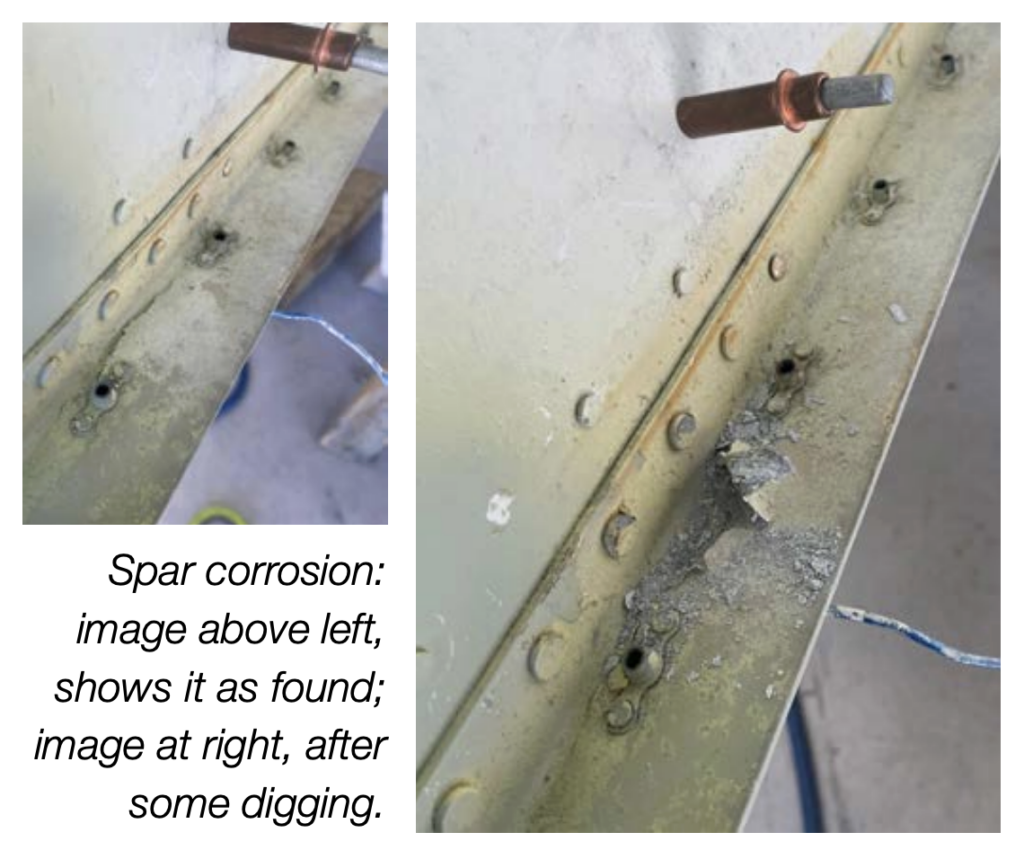
The corrosion was located in two locations on the underside of the main spar cap in the fuel tank bay, and cannot be seen without the use of a mirror or other such device when the fuel tank is fitted. Even with the wing off and the tank out, it is not that readily seen and we almost missed it as well. The wings were off the aircraft for the various repetitive Eddy-Current inspections required by the SIIDs and we also had a couple of nose ribs out of this particular wing for corrosion control purposes. It was only as the guys were setting up to rivet the nose rib back in that one of them spotted it.
How did we miss it given we had the wing off, the tank out and were carrying out detailed inspections of the wing? A talk and a think suggest that the man detailed to carry out the internal inspections of the wing got so carried away with his borescope, torch and mirror that he just plain forgot to inspect the ‘easy part’ of the wing. Human Factors at it again.
After engaging a design company and the services of Classic Aero Machining Services we were able to remove the inboard 24” of the spar, rivet in some doublers and return the wing to service. We believe the corrosion resulted from the steel fasteners passing through the spar that holds the fuel tank cover on. The rest of the spar showed no sign of corrosion at all.
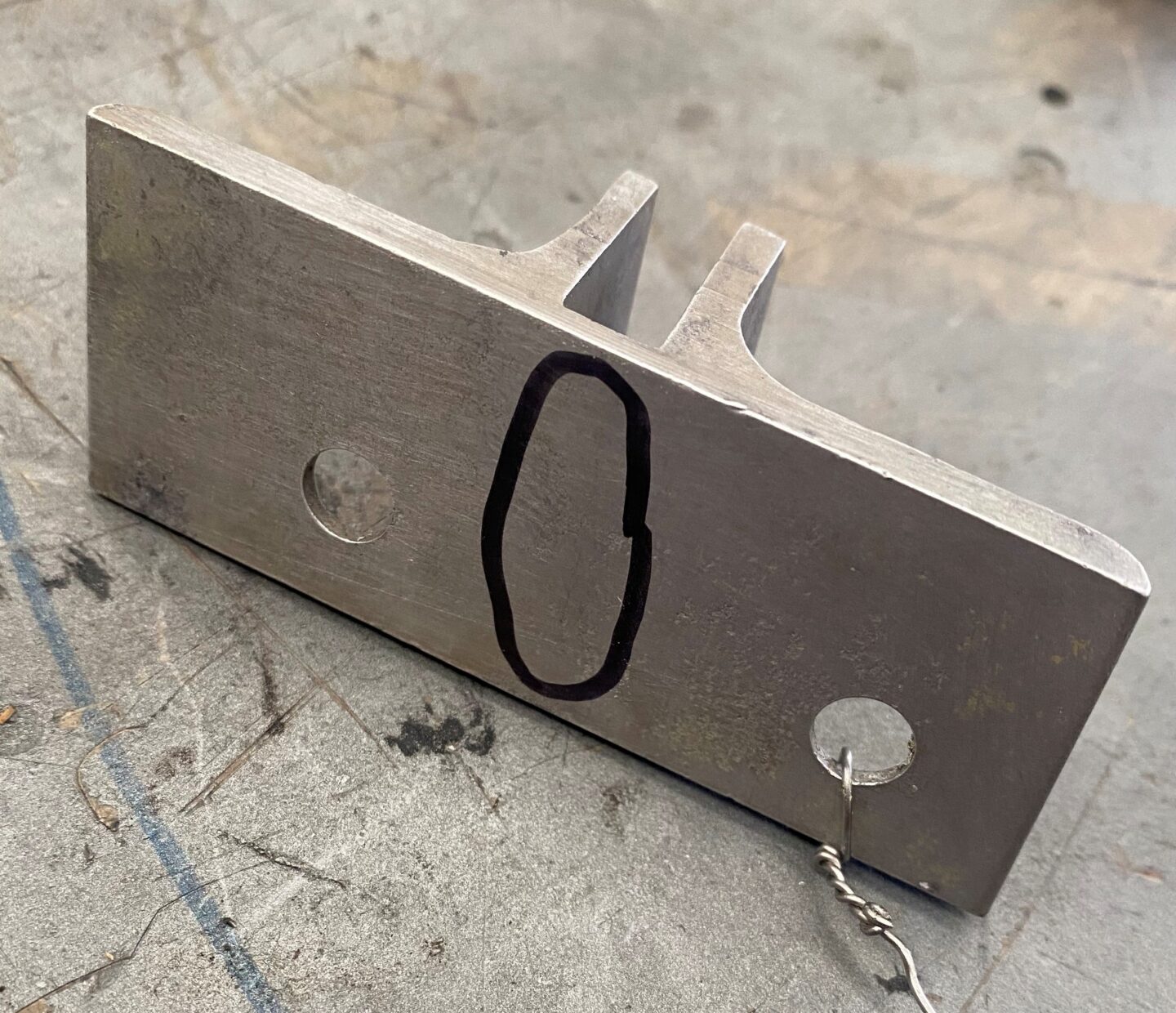
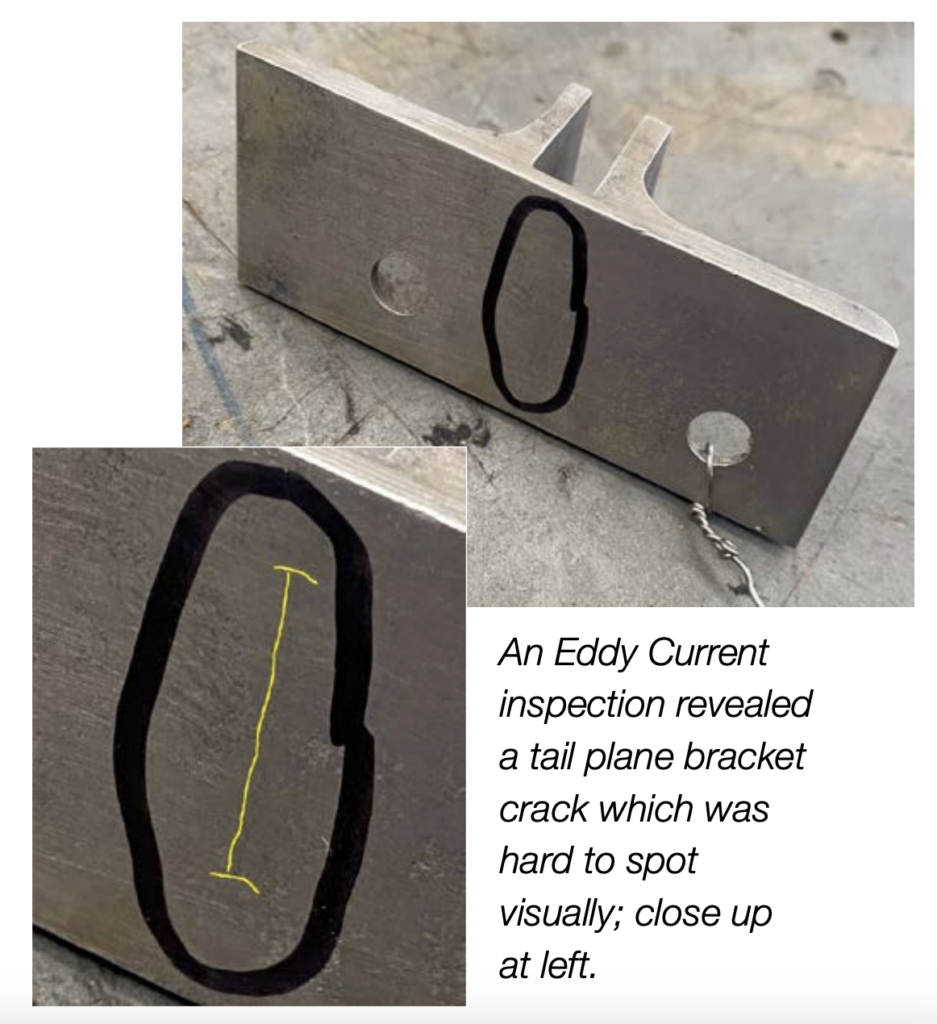
One other oddity thrown up in these SIID inspections was that we found one of the tailplane attach brackets cracked.
The SIIDs only call for a visual inspection on these, but as they were sitting there, paint stripped for inspection, we elected to Eddy Current them at the same time as the Vertical Fin fittings (which the SIIDs called for), and detected the crack shown in the photos below. It’s hard to say if we would have detected it in a visual inspection, as it was not as visible as in the photo.
This article first appeared in the Summer 2025 edition (2025 v4) of Approach Magazine, the dedicated magazine of AOPA NZ, which is published quarterly.
Members can read selected articles from Approach Magazine on this website when logged in – click here. You can also browse through all back issues of the magazine in pdf format – click here.